Six generations, one legendary pastry, and a family name that traveled from a
vaulted stone stall beside the Church of the Holy Sepulchre to sweet shops across the Middle East —
and supermarket shelves around the world.
The Story
A one-dish shop in the Old City
In 1860, in Souk Khan el-Zeit in Jerusalem's Old City, a former Ottoman soldier named
Mohammed Zalatimo I opened a tiny pastry stall at the entrance to the Church of the Holy Sepulchre.
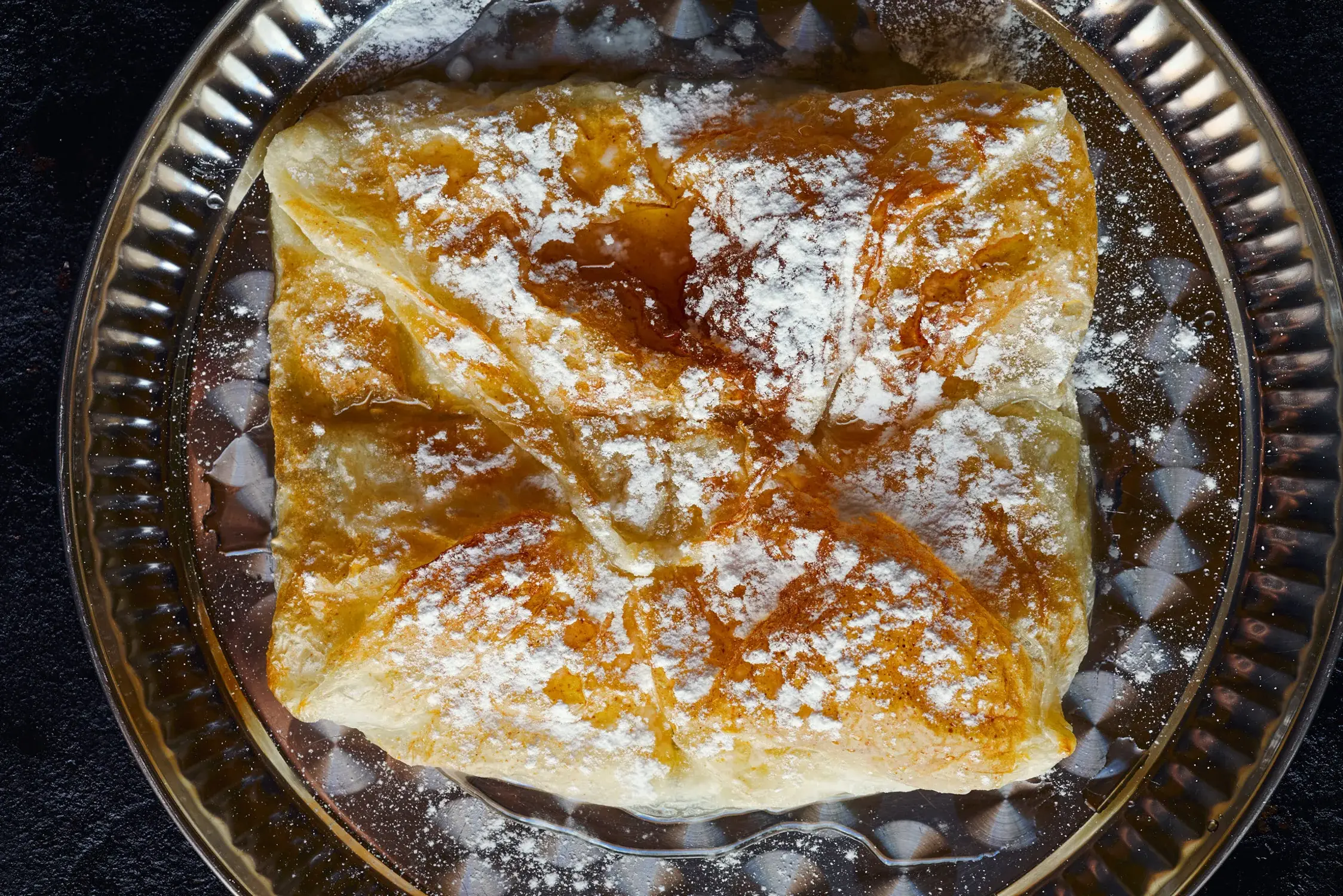
He sold exactly one thing: mutabbaq — "folded" in Arabic — sheets of hand-stretched
dough wrapped around white cheese, baked golden, drenched in syrup and dusted with sugar.
Mutabbaq — photo: Dan Perez, via Ha’aretz
Accounts of the family's telling say Mohammed I, born around 1830 in Jerusalem, discovered his
passion for baking while serving with the Ottoman army in Lebanon in the 1850s, where he is said to
have married a baker's daughter before returning home to perfect his recipe. The little shop
prospered almost immediately — a seating area was added, helpers were hired, and the pastry became
so identified with the family that locals nicknamed it "Zaltoomeh."
The stall itself occupies a vaulted, semi-subterranean stone chamber built against ancient
masonry — widely described as remnants of the original Byzantine entrance to the Holy Sepulchre.
Because the space is classified as an archaeological site, the family was never permitted to alter
its façade; for over 150 years the mutabbaq was baked on the same handmade copper trays dating to
the shop's founding.
After Mohammed I's death, his son Ibrahim carried on the craft and broadened the range of sweets,
and for more than a century successive Zalatimo men ran the Jerusalem shop essentially as a
one-man show — rolling, folding, baking and serving each order themselves. For decades,
Mr. Zalatimo would open the store before sunrise, prepare dough to create a specific number of
muttabbaqs, and once they were sold, he would close the shop and go home. Day in and day out.
That consistency and discipline helped keep the shop in business for 160 years.
In the 1980s, political hardship in Jerusalem pushed the family toward a crossroads that
would eventually turn a single stall into an international name.
Voices
Remembered by heart
For generations of Jerusalemites and the Palestinian diaspora, Zalatimo's mutabbaq
is less a pastry than a memory — of courtships, Sunday mornings, and long drives home.
"Anyone who has been to Jerusalem and did not eat Zalatimo's mutabbaq
has indeed not been in Jerusalem."
My mother used to tell me stories of how my father would take her for muttabbaq
when he was courting her. Even after they got married, it was their Sunday morning,
after-church ritual.
We used to drive from Amman to Jerusalem once a month, just to have Zalatimo
muttabbaq.
I remember once my uncle was coming to visit us from Jerusalem and he surprised us
with Zalatimo muttabbaq. We couldn't believe it!
Timeline
One hundred and sixty-six years of sweets
The family's story runs along the spine. Smaller notes in the margin — "The world
outside" — supply the geopolitical and economic currents that shaped Jerusalem, and with it the
fortunes of a small shop in its heart.
1850s
A soldier learns to bake
Serving with the Ottoman army in Lebanon, Mohammed I develops a passion for
pastry. Family lore holds that he married a baker's daughter around 1855 and worked out his
signature mutabbaq recipe of buttered dough, white cheese and sugar.
Source: [2] (which dates his start in baking to 1855) ·
historical context on the Lebanon posting
The world outside · 1850s–1860s
In 1840 the Ottomans, with European help, reclaim Jerusalem and greater Syria from a
decade of Egyptian rule under Muhammad Ali. The empire's Tanzimat reforms follow, opening
Jerusalem to foreign consulates, pilgrims, missions and investment — an economic boom that
swells the city in the decades a young Mohammed Zalatimo I comes of age.
1860
The shop opens in Souk Khan el-Zeit
Mohammed I opens his stall beside the Church of the Holy Sepulchre, selling mutabbaq as a
breakfast takeaway. Demand grows quickly; he adds seating and hires three helpers.
Mohammed I's son Ibrahim, trained at his father's side, inherits the thriving business and expands the
offerings beyond mutabbaq to a wider range of Arabic sweets and pastries.
Through the end of Ottoman rule and the years of the British Mandate, the business thrives under
Ibrahim. It becomes a fixture of Jerusalem life and tourist attraction.
The Ottoman Empire is defeated in the First World War and British forces enter Jerusalem
in December 1917, ushering in the British Mandate. The city sees renewed population growth
and foreign investment, and the pilgrim and tourist trade that sustains Old City merchants
expands with it.
1937
A family home in Ein Qinyeh
Ibrahim Zalatimo and his sons Mohammed II (Abu Nizar) and Daoud buy two houses in
Ein Qinyeh, Palestine, as summer homes. The farm becomes a gathering place for the
extended family — and, decades later, home to Sakiya, a project bringing together art,
science and agriculture. Read the farm’s story.
In the aftermath of the Second World War, the State of Israel is created. Israel takes
West Jerusalem; Jordan takes East Jerusalem and the Old City. A century of economic growth
gives way to political instability and violence — a turbulent time for the city and the
business, as tourism slows and refugees flee to neighboring Jordan and Lebanon.
1953
The third generation takes over
After running the shop for over 60 years, Ibrahim Zalatimo passes away. His youngest son,
Abdallah, takes over the sweets shop. While his older brothers, Mohammed II ("Abu Nizar")
and Daoud ("Abu Suleiman") had careers in education and the arts.
Source: Zalatimo family account
1957
A sudden loss
Abdallah Zalatimo tragically dies at the age of 46 from a heart attack. His three sons,
Aref, Ibrahim and Akram, share responsibilities of the store with the support of their elder
uncle, Mohammed II ("Abu Nizar").
Source: Zalatimo family account
The world outside · 1967
The 1967 war between Israel and the Arab countries creates refugees from the Old City
and East Jerusalem for the first time. Palestinians seek refuge in neighboring countries,
mainly Kuwait and Jordan.
1967
War scatters the family
Many Zalatimo family members leave for Jordan, Kuwait, and others. Abdallah's surviving
family take shelter in Jordan. Abu Nizar stays in Jerusalem and takes care of the shop, with
the help of his son, Khalid, and other relatives.
Source: Zalatimo family account
1972
A cousin's branch in Dahia
After working with Abu Nizar in the Old City location, Ala'i Zalatimo — son of Yusuf, son
of Musa Zalatimo (brother of Ibrahim) — opens a Zalatimo Sweets branch outside the Old City
in the Dahia neighborhood of Jerusalem.
Source: Zalatimo family account
1982
Abu Nizar passes the torch
Mohammed II Zalatimo (Abu Nizar) dies. His eldest son, Khaled, takes over the Old City
shop.
Source: Zalatimo family account
1986
Zalatimo Sweets opens in Amman
Aref (1932–2022) — who had grown up working in the shop with his father — opens a Zalatimo Sweets
with his sons, Abdallah II and Ahmad Ramzy. It is the first Zalatimo Sweets outside of Jerusalem, and
grows to become a global food company.
The First Intifada erupts across the occupied territories. Israeli restrictions on
commerce tighten, general strikes shutter the souks for long stretches, and tourism — the
lifeblood of Old City trade — falls away. The First Iraq War of 1990–91 prolongs the
instability. Tourism to Jerusalem collapses again, and the region's economies — on which
many Palestinian families, including those in Kuwait, depend — are thrown into upheaval.
c. 1992
Nabil becomes custodian in the Old City
Khaled Zalatimo passes away, leaving his son Nabil as custodian of the Old City shop. The
shop struggles as economic conditions in Jerusalem continue to decline.
Source: Zalatimo family account
The world outside · 1993
The Oslo Accords establish the Palestinian Authority and begin an internal migration of
Palestinians toward its new administrative centers, alongside a wave of foreign investment
into the West Bank — currents that will later draw a Zalatimo branch to Ramallah.
1996
The family tree branches: Zalatimo Brothers for Sweets
Another branch of the family enters the business: Mohammed II (Wael) and son, Ahmad Wael
Zalatimo, — of the line Mohammed I (founder) → Rushdie → Mohammed II — opens a second company in Jordan,
Zalatimo Brothers for Sweets, which grows into one of Jordan's best-known confectioners in
its own right.
The Second Intifada erupts in 2000, and in 2002 Israel begins constructing its separation
wall around East Jerusalem and through the West Bank. The barrier severs the Old City from
the West Bank towns whose shoppers and pilgrims had sustained its merchants for
generations.
2015
Mohammed Zalatimo for Sweets, Shu'afat
Mohammed III Zalatimo — of the line Mohammed I (founder) → Musa → Yusuf → Raja'i — opens
Mohammed Zalatimo for Sweets in Shu'afat.
Source: Zalatimo family account
2018
From the souk to the supermarket
Zalatimo Sweets of Jordan grows to roughly 250 employees, 11 stores across Amman, Kuwait, Bahrain and
Istanbul, and three factories, exporting around 250 tons of sweets a year. The brand lands in 230 Walmart Supercenters, Jewel-Osco and Kroger
in the US, distributed by Ziyad Brothers.
After nearly 160 years, press reports mourn the decline of the original Old City stall,
struggling amid the difficult conditions in Jerusalem. Smaller family-run shops continue in
Beit Hanina, Shu'afat and Ramallah.
When Covid hits, the economy in East Jerusalem — and especially the Old City — grinds to a
halt, and an already struggling business is unable to survive.
Source: Zalatimo family account
2026
Baklava on the world stage
Jordan's national team hands out Zalatimo Brothers pistachio and walnut baklava to opponents
and FIFA staff at the World Cup, and the gesture goes viral — putting the 166-year-old family
name in front of a global audience once more.
Ottoman soldier turned pâtissier who opened the original stall in 1860 and created the
mutabbaq recipe the family still guards. Every branch of the business traces itself to him.
Mohammed I's son and first successor, who learned the craft at his father's side and expanded
the shop's repertoire beyond mutabbaq into a fuller range of Arabic sweets. He ran the Old City
shop until his death in 1953.
Youngest son of Ibrahim. He took over the shop on Ibrahim's death in 1953, but died of a heart attack just four
years later, at 46 — his sons Aref and Ibrahim were studying abroad, and his youngest, Akram, was
only five.
Source: Zalatimo family account
Mohammed II Zalatimo (Abu Nizar)
Third Generation · 1900–1982
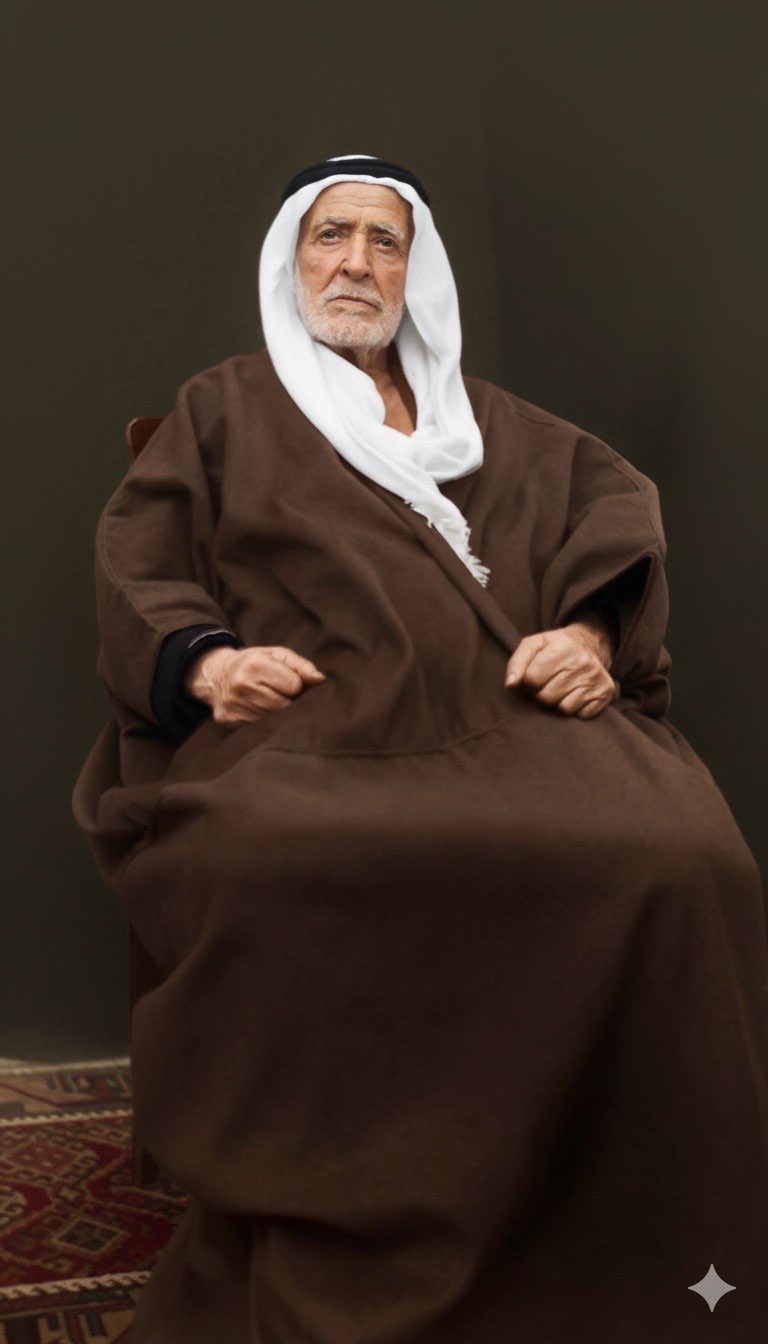
Son of Ibrahim and older brother of Abdallah I. Though his career was in education, he
supported Abdallah's sons in running the Old City shop after their father's sudden death in
1957. He stayed in Jerusalem through the upheavals of 1967 and took care of the shop with the
help of his son Khaled and other relatives.
Source: Zalatimo family account
The Jerusalem keepers
Guardians of the Old City stall
The Old City stall has passed through an unbroken chain of family hands: founder Mohammed I
(1860), his son Ibrahim (until 1953), Ibrahim's youngest son Abdallah I (1953–1957),
then Abdallah's three sons Aref, Ibrahim and Akram (1957–1967), their uncle Abu Nizar with
his son Khaled (from 1967), Khaled (1982–c. 1992), and
Khaled's son Nabil — custodian of the original location to this day, and founder of its
Ramallah branch around 2002.
In recent decades, family members including Hani Zalatimo kept the shop alive as a
deliberately unmarketed, one-dish institution, drawing admirers from Yotam Ottolenghi to food
writers worldwide.
The dish that built the dynasty is austere by design: dough, white cheese (traditionally
sheep's or goat's milk curds), sugar syrup, and powdered sugar. Everything depends on
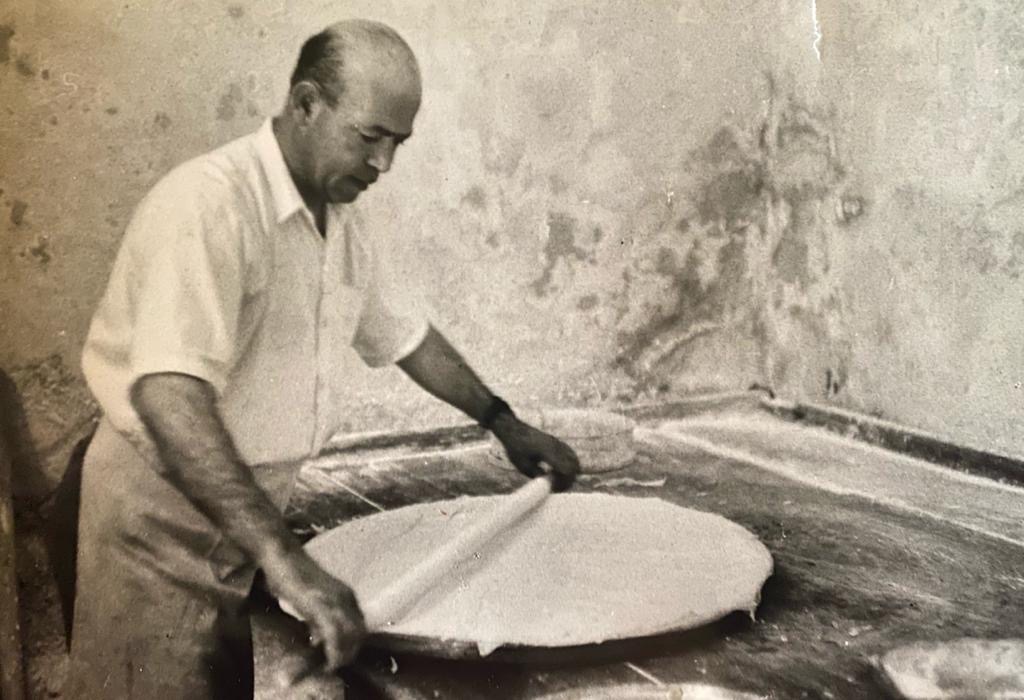
technique — the dough is flipped and stretched by hand against stone until it turns
translucent, "tracing-paper thin."
1 · StretchThe specially formulated dough is hand-flipped and stretched
until nearly transparent. Learning this technique takes hours of apprenticeship.
2 · Fill & foldWhite cheese curds are scattered over the
sheet, which is folded, origami-like, into a neat square.
3 · BakeBrushed with clarified butter and baked at high heat til
puffy and crispy.
4 · FinishDrizzled with syrup, dusted with powdered sugar, quartered,
and served hot. Always eaten by hand.
Mutabbaq in the making — video: Zalatimo family archive
The Old City shop famously offered no menu — mutabbaq was the menu.
Today both Amman companies still make it, alongside baklava, ma'amoul, barazek, ghraybeh, borma
and knafeh.
Abdallah Zalatimo II's company: stores across Amman with outlets reaching Kuwait, Bahrain and
Istanbul, three factories, and roughly 250 tons of sweets exported each year. In the United
States its boxed baklava, ma'amoul, barazek and ghraybeh are distributed by Ziyad Brothers
and have been stocked at Walmart (230 Supercenters), Jewel-Osco and Kroger, plus an Amazon
storefront.
Founded and led by Ahmad Wael Zalatimo, of the Mohammed I → Rushdie → Wael line of the
family. Multiple branches
across Amman (including Shmeisani and the Boulevard), a seasonal outlet at Dubai's Global
Village, and online ordering with delivery across the US, Europe and the Middle East. The
brand earned global attention in June 2026 when Jordan's World Cup squad gifted its baklava
after matches.
The original 1860 stall in Souk Khan el-Zeit remains in family hands under its custodian,
Nabil Zalatimo — closed since the Covid shutdown of 2020, after years of decline behind the
separation wall, its archaeologically protected vault unchanged and its fate a subject of
deep affection among Jerusalemites. Nabil also runs
the Ramallah branch he opened around 2002, and other branches of the family operate their own
shops, including Mohammed Zalatimo for Sweets in Shu'afat (opened 2015) and shops in
Beit Hanina.
A note on accuracy: This history is compiled from press
coverage and the companies' own accounts. Sources differ on minor details — some date Mohammed I's
baking beginnings to 1855, generational counts vary between tellings, and the operating status of
the original Old City stall has fluctuated with conditions in Jerusalem. Figures such as revenue
and store counts reflect reporting from 2019–2026 and may have changed.
Beyond the sweets shop
The Zalatimo farm at Ein Qinyeh
Away from Jerusalem’s Old City, the family’s houses and grounds in
Ein Qinyeh hold another part of the Zalatimo story: summers together, the disruption of
1967, and a new chapter as the home of Sakiya.
A family summer home · 1937
In 1937, Ibrahim Zalatimo and his sons Mohammed II (Abu Nizar) and Daoud bought
two houses overlooking Ein Qinyeh, west of Ramallah. Built for the Jerusalemite
Dosouqi family, the upper house dated to 1916 and the lower to 1932. The surrounding
landscape of springs, fruit trees and wooded slopes became the setting for shared
family summers.
In Bassam Almohor’s account for This Week in Palestine, Daoud’s daughter
Fayza recalls learning to swim in the upper house’s pool, listening to her grandmothers’
stories on summer evenings, and playing with her cousins beneath a large oak tree.
The houses stood empty during the summer of 1967 following the Israeli occupation
of the West Bank. According to Almohor’s account, they were later looted and vandalized.
The places that had brought the family together fell silent.
Architect and conservationist Sahar Qawasmi and artist Nida Sinnokrot founded
Sakiya – Art Science Agriculture
in 2016. In 2017, they were entrusted with the Zalatimo family’s historic site in
Ein Qinyeh. Support from the A. M. Qattan Foundation followed in 2018 to help renovate
the site and establish the project there.
Sakiya brings local agricultural knowledge into conversation with contemporary art
and ecological practice. Its work includes food production, artist residencies,
exhibitions, research and educational workshops — connecting learning with the land
and the people who care for it. On the grounds of the family home, this is a distinct
cultural and agricultural chapter in the estate’s history, rather than a branch of
the sweets business.
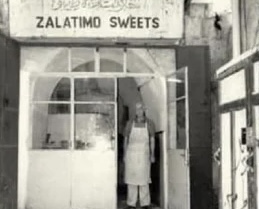
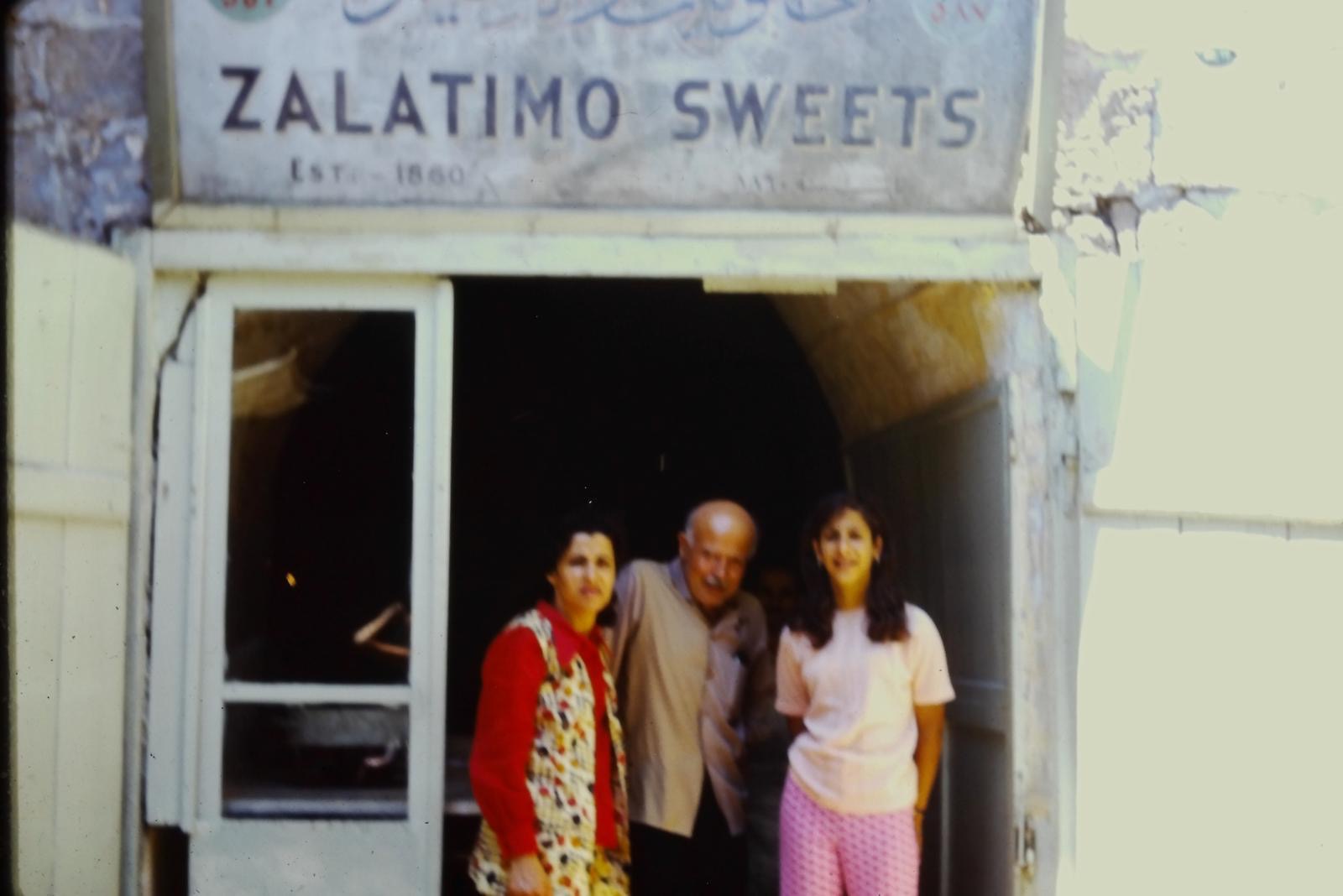
Photographs from the Zalatimo family archive — the Old City shop and the people
behind it, across the generations.
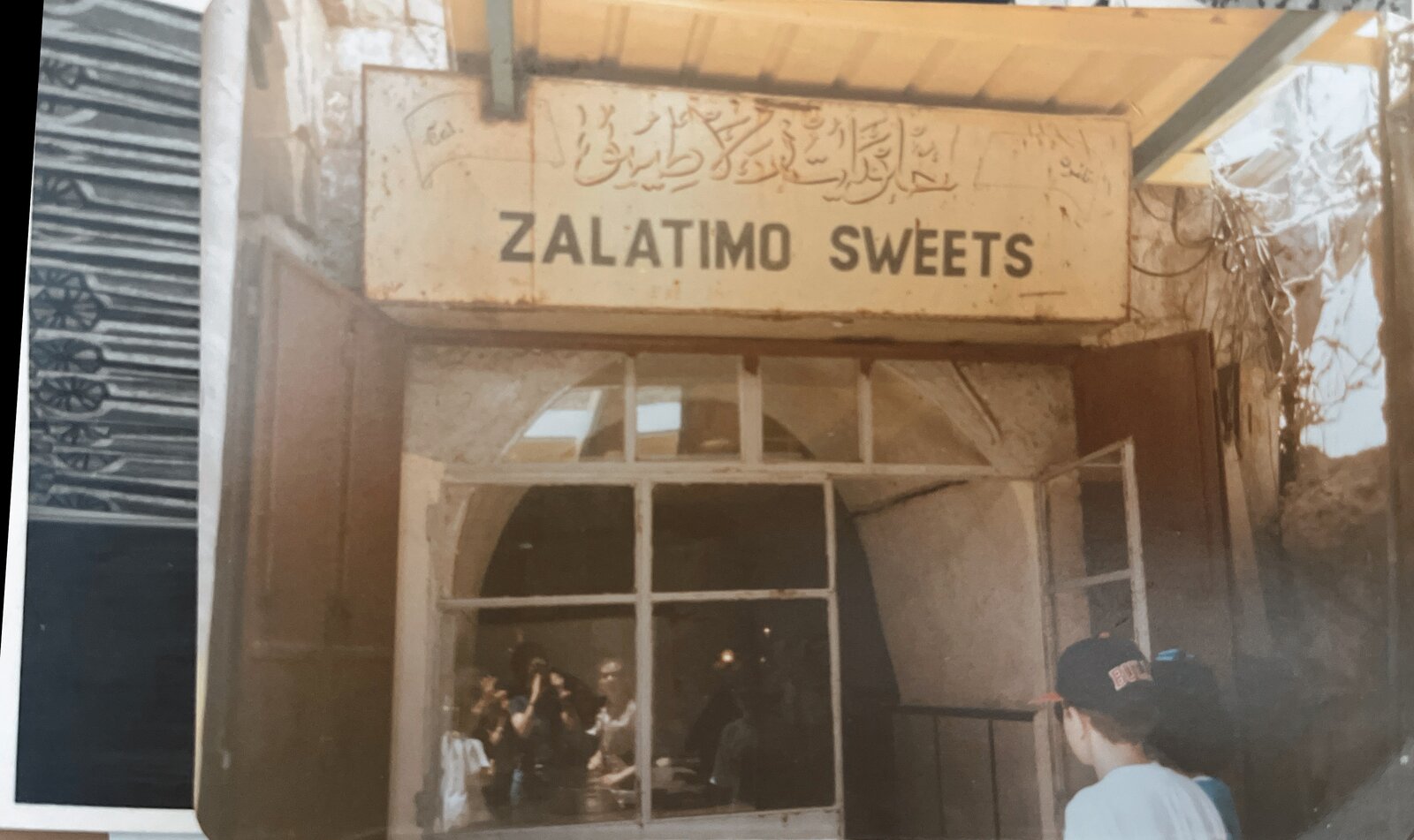
The Zalatimo Sweets shopfront in the Old City — photo: Zalatimo family archiveUnder the "Est. 1860" sign at the shop entrance — photo: Zalatimo family archiveAbdallah Zalatimo I making baklava, c. 1955 — photo: Zalatimo family archiveIbrahim Zalatimo, son of founder Mohammed I (c. 1865–1953), who operated the shop from the late 1800s until 1953 — photo: Zalatimo family archiveThe shop sign above the entrance, customers within — photo: Zalatimo family archive
Sources
Further reading
Numbered references cited throughout the page. Click any
[n] footnote to jump here.
Zalatimo — Family Business Histories — the fullest single account of the family story, generations, the 1986 Amman expansion and the 1996 split.
Daoud Zalatimo — PASSIA — biographical entry: 1906–2001, teacher training in Jerusalem and Haifa, art-education inspector for the Jordanian Ministry of Education, UNESCO consultant in Libya.